

Technology is moving beyond simple digital convenience and becoming a central part of how people work, communicate, shop, learn, travel, and manage everyday responsibilities. In 2026, innovation is increasingly focused on intelligent systems that can understand context, automate decisions, operate closer to users, and work alongside humans. Artificial intelligence remains an important force, but it is no longer the only technology worth watching. Robotics, quantum computing, edge intelligence, cybersecurity, immersive experiences, and advanced connectivity are also developing rapidly.
For whitemagz readers, understanding these developments can make it easier to recognize which technologies are genuinely useful and which are simply receiving temporary attention. The most important shift is that several technologies are now converging. AI can operate through connected devices, robots can interpret their surroundings, cybersecurity can use machine intelligence, and edge computing can process information without always depending on distant cloud servers. Together, these changes are creating a more responsive and automated digital environment.
1. Agentic AI Is Moving Beyond Simple Chatbots
Generative AI has already changed how people create text, images, software, presentations, and research summaries. The next development is agentic AI, where systems can perform multiple steps toward a goal instead of responding to one isolated instruction. Rather than simply answering a question, an AI agent may analyze information, organize tasks, use connected software, and return a completed result with limited human intervention.
This makes AI increasingly relevant to business operations and personal productivity. A company could use agents to organize customer requests, prepare reports, monitor workflows, or identify routine problems. Individuals may use them to plan schedules, summarize documents, compare information, or automate repetitive digital tasks. The important issue will be maintaining human oversight while giving AI enough access to complete useful work.
2. AI-Native Software Development Is Growing
Software development is also changing as AI becomes integrated directly into coding environments. Developers can use intelligent tools to generate code, explain unfamiliar functions, detect errors, create tests, and accelerate documentation. Instead of replacing software professionals completely, these systems are increasingly becoming productivity partners.
The larger change is the emergence of AI-native development. Applications are being designed with AI capabilities from the beginning rather than adding an AI feature after the product is finished. This approach can produce smarter search, personalized interfaces, automated analysis, and natural-language controls.
For whitemagz readers interested in technology careers, learning how to work effectively with AI-assisted development could become just as valuable as knowing individual programming languages. Human judgment, architecture, security awareness, and problem-solving will remain essential.
3. Physical AI and Smarter Robotics
Robotics is entering a more intelligent phase. Traditional robots typically followed carefully programmed instructions in controlled environments. Modern systems increasingly combine sensors, computer vision, machine learning, and advanced processors to understand changing surroundings and respond accordingly.
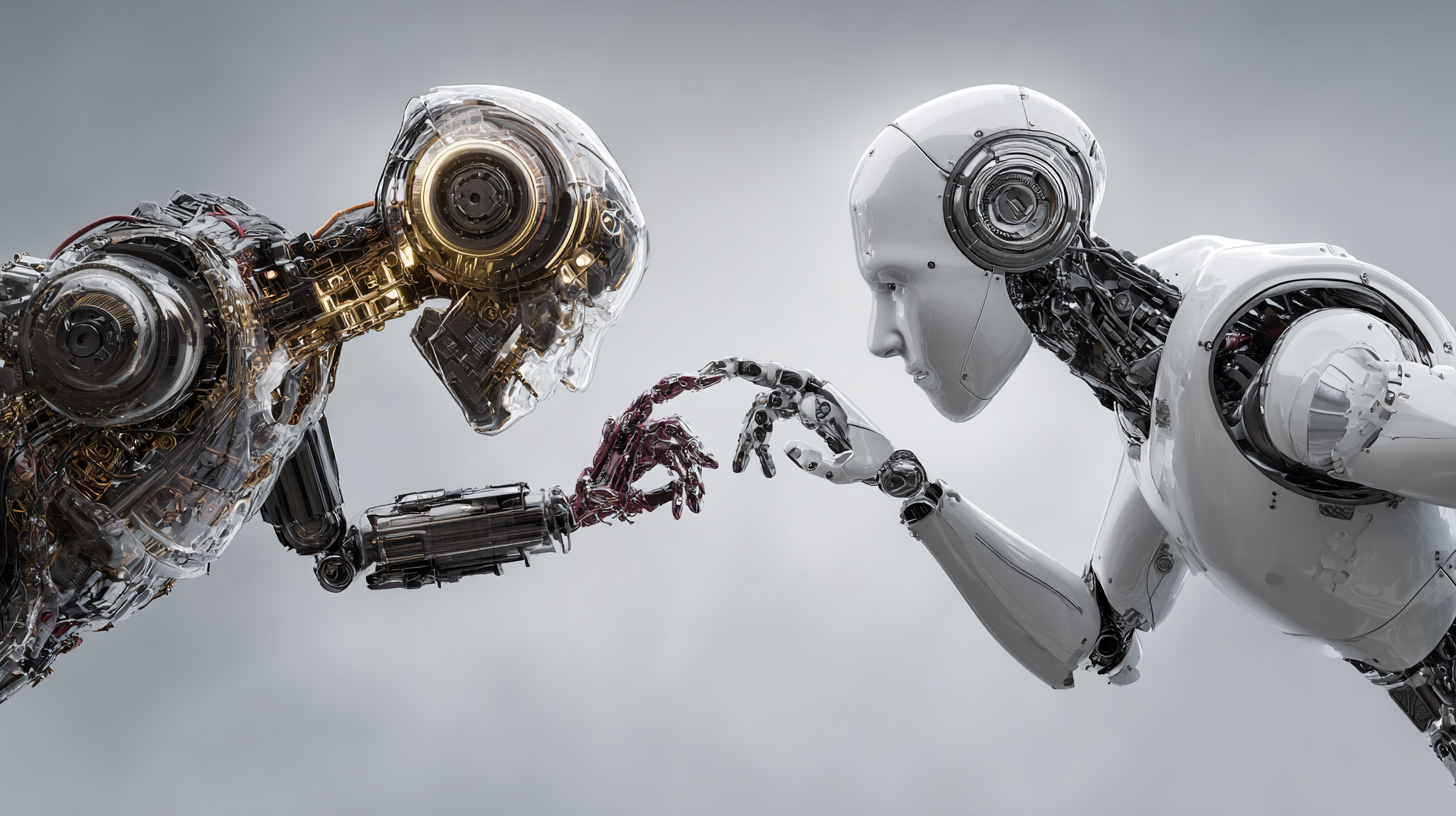
This development is often described as physical AI because intelligence is being placed into machines that interact with the physical world. Potential applications include warehouses, manufacturing plants, agriculture, healthcare environments, logistics, and domestic assistance.
The most interesting development is not simply robots becoming faster. It is their ability to interpret situations and make decisions within defined boundaries. As hardware becomes more capable and AI models become more efficient, robots could handle a wider range of tasks that previously required constant human supervision.
4. Quantum Computing Continues Its Long-Term Rise
Quantum computing remains one of the most closely watched areas of advanced technology. Unlike conventional computers, quantum systems use quantum mechanical principles to process certain types of problems differently. They are not designed to replace everyday laptops or smartphones, but they could eventually help address specialized challenges involving chemistry, optimization, materials, and scientific simulation.
In 2026, quantum computing remains an emerging field rather than an everyday consumer technology. However, its development matters because future quantum machines could affect industries that depend on complex calculations.
Another reason businesses are paying attention is security. Organizations are increasingly considering how future quantum capabilities could affect existing encryption. Preparing for stronger, quantum-resistant security is therefore becoming part of long-term technology planning.
5. Cybersecurity Becomes More AI-Driven
As technology becomes more connected, cybersecurity is becoming increasingly important. Attackers can use automation and AI to create convincing phishing campaigns, identify weaknesses, manipulate information, and scale attacks. Defenders are responding with intelligent monitoring and automated threat detection.
Modern cybersecurity is shifting from simply reacting after an incident to identifying suspicious behavior earlier. AI systems can examine large quantities of activity and highlight patterns that may be difficult for human teams to spot manually.
For individuals, this trend means basic digital security habits remain essential. Strong passwords, multifactor authentication, software updates, careful handling of suspicious messages, and awareness of impersonation scams can make a significant difference.
For businesses, security needs to become part of the technology design process rather than an afterthought.
6. Edge Computing Makes Technology More Responsive
Cloud computing has transformed how applications store and process information, but not every task needs to travel to a distant data center. Edge computing moves some processing closer to the device or location where data is generated.
This can be especially useful for connected vehicles, industrial equipment, smart cameras, healthcare devices, retail systems, and other applications that need fast responses. Processing information locally can reduce delays and may also limit the amount of sensitive data that needs to travel across networks.
The future is therefore unlikely to be completely cloud-based or completely local. A combination of cloud infrastructure and edge processing can allow applications to balance performance, cost, privacy, and reliability.
Technology Trends Worth Watching in 2026
| Technology | Main Development | Potential Impact |
|---|---|---|
| Agentic AI | Multi-step task automation | Higher productivity |
| AI-Native Software | AI integrated into development | Faster application creation |
| Physical AI | Intelligent machines and robots | Smarter automation |
| Quantum Computing | Specialized advanced computation | Scientific and industrial breakthroughs |
| AI Cybersecurity | Automated threat detection | Stronger digital protection |
| Edge Computing | Local data processing | Faster connected services |
| Spatial Computing | Digital experiences in physical spaces | New interaction models |
| Advanced Connectivity | Faster intelligent networks | More connected devices |
7. Spatial Computing Is Expanding Digital Experiences
Spatial computing combines digital information with physical environments through technologies such as augmented reality, mixed reality, and advanced wearable devices. Instead of interacting with technology only through a traditional screen, users can increasingly interact with digital objects in three-dimensional spaces.
Businesses can use spatial experiences for employee training, product demonstrations, design visualization, remote collaboration, and education. Consumers may encounter them through gaming, entertainment, navigation, shopping, and creative applications.
The technology still faces challenges involving cost, comfort, battery life, content availability, and user adoption. Nevertheless, the broader idea is important: digital interfaces are gradually becoming more immersive and context-aware.
8. Smart Devices Are Becoming More Intelligent
Smartphones, watches, televisions, vehicles, home appliances, and other connected products are becoming increasingly capable of processing information and adapting to user behavior. AI-powered features can help devices recognize patterns, personalize experiences, improve accessibility, and automate routine actions.

The next generation of smart devices is likely to focus less on adding dozens of features and more on making existing functions easier to use. Voice interaction, predictive assistance, on-device AI, personalized recommendations, and automated routines can make technology feel more natural.
For whitemagz readers, this means the definition of a “smart device” is changing. Intelligence will increasingly be built into everyday products rather than existing only inside dedicated AI applications.
9. Technology and Energy Efficiency Will Become More Closely Connected
Power consumption is becoming an important consideration as AI systems, data centers, connected devices, and high-performance computing continue to expand. Technology companies are therefore exploring more efficient processors, specialized hardware, improved cooling, optimized software, and alternative computing architectures.
Energy efficiency will matter not only for environmental reasons but also for operating costs. A system that can complete the same task with fewer computing resources can be easier and cheaper to scale.
This trend could encourage more attention toward efficient AI models, on-device processing, specialized chips, and computing architectures designed around particular workloads.
10. Digital Trust Will Become a Competitive Advantage
The rapid growth of AI also creates a growing need for trust. Users want to know whether digital content is authentic, how their information is being handled, and whether automated systems are making responsible decisions.
Organizations will increasingly need clear policies around AI use, data protection, content authenticity, access controls, and human oversight. Technologies that help verify the origin and integrity of digital information may become more important as synthetic media becomes easier to produce.
For whitemagz readers, the lesson is simple: being technologically advanced is not enough. The most successful digital products will also need to be secure, transparent, reliable, and easy for people to understand.
How These Trends Could Change Everyday Life
The real importance of these technologies becomes clearer when they are viewed together. AI agents could organize digital tasks, edge computing could process information locally, connected devices could share useful data, and robotics could bring intelligent automation into physical environments.
This convergence could influence almost every sector. In education, students may receive more personalized learning support. In manufacturing, intelligent machines could improve efficiency. In healthcare, advanced computing could support research and analysis. In retail, AI could improve product discovery and customer service. In transportation, intelligent systems could help optimize routes and operations.
However, technology will not automatically create better outcomes. People and organizations will need to consider privacy, affordability, security, accessibility, employment changes, and responsible implementation.
What Should Readers Watch Most Closely?
Not every emerging technology will become mainstream at the same speed. Some innovations may remain experimental for years, while others can quickly become ordinary features in products and services.
The strongest trends to watch are those that solve practical problems:
- AI that saves meaningful time
- Robotics that handles difficult or repetitive work
- Security tools that prevent emerging threats
- Computing systems that reduce energy and processing costs
- Devices that provide useful intelligence without unnecessary complexity
- Technologies that improve accessibility and communication
This practical perspective can help whitemagz readers separate genuine technological progress from short-lived hype.
Conclusion
The technology landscape of 2026 is defined less by one revolutionary invention and more by the convergence of multiple intelligent systems. AI agents are becoming more capable, software development is becoming increasingly AI-assisted, robotics is gaining greater awareness, quantum computing is progressing toward specialized applications, and cybersecurity is adapting to machine-speed threats. At the same time, edge computing, spatial technology, smart devices, advanced processors, and energy-efficient infrastructure are creating the foundation for a more connected digital world. For whitemagz readers, keeping track of these trends is not simply about knowing the latest gadgets. It is about understanding how technology is changing the way people work, communicate, solve problems, and interact with digital systems. The most valuable approach in 2026 is to remain curious but selective. Technology will continue to evolve quickly, but the innovations that deliver measurable value, protect users, and solve real-world problems are the ones most likely to shape the future.