

Robotics was once strongly associated with factories, assembly lines, welding stations, and highly controlled industrial environments. Today, that image is changing rapidly. Robots are becoming part of homes, hospitals, farms, schools, restaurants, warehouses, transportation networks, and public spaces. Instead of simply repeating programmed movements, newer robotic systems can perceive surroundings, interpret information, navigate independently, and cooperate with people. Advances in artificial intelligence, computer vision, sensors, connectivity, and compact hardware are helping robots function in environments that are far less predictable than factories.
This transformation represents a major shift in how people experience automation. A robot may now clean a floor, inspect a difficult-to-reach location, assist with rehabilitation, deliver goods, monitor crops, or help someone maintain greater independence at home. whitemagz highlights this broader transition because the most important robotics developments are no longer limited to industrial productivity. They increasingly focus on convenience, safety, accessibility, precision, and human assistance. The future of robotics is therefore not simply about machines replacing manual work; it is about creating practical systems that work alongside people in everyday environments.
The Shift From Automation to Intelligent Assistance
Traditional automation generally follows predefined instructions. If the environment changes significantly, the machine may require human intervention or reprogramming. Modern robotics is becoming more adaptive. Sensors provide information about surroundings, artificial intelligence helps interpret that information, and navigation systems allow robots to respond to changing conditions.
This evolution is particularly important outside factories. A household contains furniture, pets, children, uneven surfaces, narrow spaces, and constantly changing routines. A hospital contains patients, medical staff, equipment, and unpredictable movement. Agricultural fields vary in terrain, weather, crop maturity, and soil conditions. Robots operating in these environments must make decisions rather than simply repeat movements.
Several technologies are driving this transition:
- Computer vision for recognizing objects and environments
- Artificial intelligence for decision-making and pattern recognition
- LiDAR, cameras, radar, and other sensors for navigation
- Machine learning for improving performance
- Wireless connectivity for remote monitoring and coordination
- Improved batteries for longer operating periods
- Compact actuators and motors for more flexible movement
These technologies are helping robotics move from rigid automation toward responsive physical assistance.
Robotics in Modern Homes
The home is becoming one of the most visible environments for everyday robotics. Robot vacuum cleaners and mopping systems are already familiar examples, but domestic robotics is gradually becoming more sophisticated. Machines can map rooms, identify obstacles, schedule cleaning routines, and return automatically to charging stations.
Lawn-mowing robots provide another example. Instead of requiring constant supervision, autonomous outdoor machines can follow mapped boundaries and maintain lawns according to programmed schedules. Window-cleaning robots can use sensors and controlled movement to work on glass surfaces, while specialized devices can assist with pool maintenance.
Future domestic robotics may involve multiple specialized machines working together rather than one universal humanoid robot. This approach can be more practical because each device is designed for a specific task. Recent developments also suggest that AI-powered coordination could allow household devices to operate as a connected robotic ecosystem rather than isolated appliances.
Healthcare Robotics and Human Support
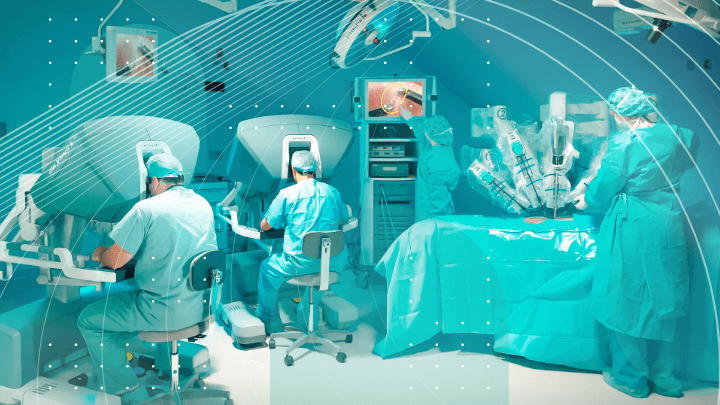
Healthcare is another area where robotics can provide meaningful assistance. Surgical robotic systems can help medical professionals perform highly controlled movements, while rehabilitation robots can support repetitive exercises and measure patient performance.
Robotic rehabilitation is especially valuable because recovery exercises often require repeated, precise movements. Robotic systems can provide consistent assistance while collecting performance information that therapists can use to evaluate progress. Importantly, these technologies are generally designed to support healthcare professionals rather than eliminate the human role.
Robotics can also assist with logistics inside hospitals. Machines may transport supplies, medications, laboratory materials, or equipment, reducing the amount of routine movement required from healthcare workers.
Potential healthcare applications include:
- Robotic rehabilitation and mobility assistance
- Surgical assistance
- Hospital supply transportation
- Patient monitoring
- Medication-related support
- Assistive technologies for people with disabilities
- Elder-care assistance and reminders
As populations age and healthcare systems face staffing pressures, assistive robotics could become increasingly valuable for maintaining independence and supporting caregivers.
Robots Supporting Independent Living
One of the most meaningful applications of everyday robotics is assistance for older adults and people with limited mobility. Instead of focusing solely on physical strength, these systems can help people manage everyday routines.
A robotic assistant might remind someone about meals, hydration, exercise, appointments, or household activities. Mobile robots can potentially move through rooms, recognize people, provide communication functions, and alert caregivers when assistance may be needed.
Recent real-world experimentation has demonstrated how assistive robots can help reduce caregiving burdens while allowing individuals to remain in familiar home environments.
The value of these systems goes beyond convenience. Independence can have emotional and social importance. A person who can receive limited assistance without constantly relying on another individual may experience greater confidence and autonomy.
However, successful adoption requires careful attention to privacy, reliability, safety, affordability, and ease of use. A helpful robot must be understandable and dependable rather than simply technologically impressive.
Agricultural Robotics for Smarter Farming
Agriculture presents a different set of challenges for robotics. Fields are large, outdoor conditions change constantly, and crops can be delicate. Yet these challenges also create strong opportunities for automation.
Autonomous tractors, robotic harvesters, crop-monitoring systems, and precision-machinery are being developed to reduce labor demands and improve farming efficiency. Vision systems can help identify weeds, monitor plant conditions, and distinguish crops from surrounding vegetation.
Agricultural robotics can also support more targeted use of resources. Instead of treating an entire field identically, intelligent systems can potentially identify areas that need water, nutrients, or pest control. Research into agricultural robotics increasingly favors task-specific machines designed for activities where accuracy, frequency, or labor requirements justify automation.
For farmers, the long-term attraction is not simply replacing workers. It is about making limited labor, water, land, and other resources more productive.
Robotics in Retail, Restaurants, and Hospitality
People increasingly encounter robots while shopping, dining, traveling, and using delivery services. Restaurants can employ machines for food preparation, transportation of dishes, cleaning, or delivery within controlled environments. Hotels and retail facilities can use autonomous machines to transport items or support repetitive service tasks.
These robots are often less visible than humanoid machines because their designs are optimized for specific jobs. A wheeled delivery robot does not need arms or a human-like body if its primary purpose is transporting a package.

Service robotics is expanding because robots can operate in environments shared with people, provided they have suitable sensing, navigation, and safety mechanisms. Their applications now span hospitals, warehouses, hotels, farms, and homes.
For businesses, the most useful robots may therefore be relatively simple machines that perform one task reliably rather than expensive machines attempting to imitate every human ability.
Robotics in Transportation and Delivery
Transportation is another field where robotics is changing everyday experiences. Autonomous vehicles, delivery robots, drones, and automated warehouse systems demonstrate different approaches to moving people or goods with reduced human intervention.
Delivery robots can navigate designated environments and transport food or packages over relatively short distances. Drones can inspect infrastructure, monitor remote locations, and support logistics where traditional transportation is difficult.
The underlying principle is similar across these applications: machines combine sensors, software, navigation technology, and physical movement to complete tasks in environments that may change from one moment to the next.
As these systems improve, robotics may become less noticeable. People may interact with automated delivery and transportation services without thinking of them as “robots” at all.
A Quick Look at Everyday Robotics
| Area | Example of Robotic Use | Main Benefit |
|---|---|---|
| Home | Vacuuming and lawn maintenance | Convenience |
| Healthcare | Rehabilitation systems | Consistent assistance |
| Elder care | Reminders and mobility support | Greater independence |
| Agriculture | Crop monitoring and precision machines | Resource efficiency |
| Restaurants | Food and item delivery | Faster service |
| Warehousing | Picking and transportation | Productivity |
| Transportation | Autonomous delivery | Reduced manual workload |
| Education | Interactive learning robots | Engagement |
| Public services | Inspection and monitoring | Improved safety |
| Hospitality | Room and supply assistance | Operational efficiency |
Robotics Is Changing Education and Learning
Robots can also become educational tools. Programmable machines allow students to learn programming, engineering, mathematics, electronics, and problem-solving through physical experimentation.
Unlike purely digital software, robotics gives learners a tangible system that responds to instructions. A student can write a program, observe the robot’s behavior, identify an error, and modify the code. This creates an interactive learning cycle.
Socially interactive robots may also be used in educational settings to support language practice, engagement, or specialized learning activities. Their role is best understood as complementary to teachers rather than a substitute for educators.
whitemagz emphasizes the wider significance of this trend: robotics can become a practical bridge between digital knowledge and physical problem-solving. As technology becomes more accessible, educational robotics could help students develop skills relevant to engineering, automation, artificial intelligence, and future workplaces.
Environmental Monitoring and Public Safety
Robots can perform tasks that are dangerous, repetitive, remote, or difficult for people. Drones can inspect bridges, towers, pipelines, and large areas. Ground robots can enter hazardous environments where human exposure would be risky. Underwater robots can explore locations that are difficult for divers to reach.
Environmental applications can include monitoring forests, inspecting infrastructure, observing wildlife, and collecting information from challenging environments.
This is one of the strongest arguments for robotics: a machine does not need to replace a human to provide value. Sometimes its greatest contribution is allowing a person to avoid unnecessary danger.
Robotic inspection can also make maintenance more proactive. Instead of waiting for a visible failure, sensors and automated systems may identify unusual conditions earlier, allowing organizations to investigate potential problems before they become serious.
The Growing Importance of Human-Robot Collaboration
The future of robotics is unlikely to consist entirely of autonomous machines operating independently. Human-robot collaboration is becoming increasingly important.
Collaborative robots, often called cobots, are designed to operate alongside people in suitable environments. Instead of taking over an entire workflow, they can handle physically demanding, repetitive, or precision-oriented tasks while people focus on judgment, communication, creativity, and decision-making.
This model is particularly relevant as robotics enters everyday environments. People generally do not want a machine to control every aspect of their lives. They want technology that helps when needed and remains predictable when it does not.
Modern physical AI is pushing robots toward greater adaptability, allowing machines to combine perception, decision-making, and physical action. Yet challenges involving cost, safety, training data, reliability, and privacy remain important.
Challenges That Could Slow Everyday Adoption
Despite impressive progress, everyday robotics still faces several barriers. A robot that works perfectly in a controlled laboratory may struggle in a crowded home or busy public environment.
Cost is another concern. Advanced hardware, sensors, batteries, processors, maintenance, and software can make sophisticated robotic systems expensive.
Privacy also deserves attention. Robots equipped with cameras, microphones, or environmental sensors may collect information from private spaces. Consumers need understandable controls over what is collected, how information is processed, and who can access it.
Other challenges include:
- Physical safety around children and pets
- Dependable operation in unpredictable environments
- Battery life and charging requirements
- Maintenance and repair costs
- Cybersecurity
- User-friendly interfaces
- Ethical decisions involving autonomous systems
- Workforce adaptation and reskilling
Solving these problems will be just as important as improving robotic movement.
What the Future of Everyday Robotics May Look Like
The next phase of robotics may be less about spectacular demonstrations and more about quiet usefulness. Instead of expecting one machine to perform every household task, consumers may use networks of specialized robotic devices.
A home could eventually coordinate cleaning, security, outdoor maintenance, energy management, and assistance through intelligent software. Healthcare facilities may combine mobile robots, rehabilitation machines, surgical systems, and monitoring technologies. Farms could use fleets of specialized machines that collect information and perform targeted tasks.
Humanoid robots may have a role where human-shaped movement provides a genuine practical advantage, but simpler designs will remain attractive when they can accomplish a task more efficiently. Current robotics research increasingly demonstrates that specialized machines can provide immediate value without requiring human-like bodies.
This points toward a future where robotics becomes less of a novelty and more of an invisible layer of everyday infrastructure.
Conclusion
Robotics in everyday life represents a significant evolution from the traditional image of machines confined to factories. Robots are now moving into homes, healthcare, agriculture, education, transportation, hospitality, environmental monitoring, and personal assistance. Their value comes from combining physical capabilities with sensing, connectivity, and increasingly sophisticated artificial intelligence. The most successful systems will not necessarily be the machines that look the most futuristic. They will be the ones that solve real problems safely, affordably, and reliably. whitemagz highlights this shift toward practical robotics because the technology’s greatest impact may emerge through small improvements repeated across millions of daily activities.