

Rising electricity prices and increasing appliance use have made energy management an important part of modern home ownership. Many households know the amount they pay each month but have little idea which appliances are responsible for the biggest share of that expense. A home energy monitoring system closes that information gap by showing how electricity is being consumed throughout the day. Instead of relying only on a monthly bill, homeowners can examine consumption patterns, identify unusual spikes, and make better decisions about when and how appliances should operate. whitemagz com highlights this shift toward smarter household energy management as technology makes consumption data easier to understand. Modern monitoring can reveal everything from an inefficient air conditioner running too long to appliances quietly drawing power while apparently switched off. The goal is not simply to collect data but to turn that information into practical actions that lower waste and improve household efficiency.
Understanding Home Energy Monitoring Systems
A home energy monitoring system measures electricity consumption and presents the information in a way that homeowners can interpret. Depending on the system, monitoring may happen across the entire property, at individual circuits, or through specific appliances and smart plugs. Some systems provide live readings, while others build daily, weekly, or monthly consumption histories.
The basic principle is straightforward: measure energy use, organize the information, and help the homeowner identify patterns. More advanced systems can send notifications when consumption suddenly rises or when a particular appliance operates outside its normal schedule. This visibility is particularly useful because a conventional electricity bill generally provides a total figure rather than explaining which devices created that demand.
Why Energy Visibility Matters
Energy waste often remains invisible because many appliances operate automatically. Refrigerators cycle throughout the day, water heaters may maintain temperature, air conditioners can run for extended periods, and entertainment equipment can remain in standby mode. A homeowner may not realize how these small or repeated consumption patterns accumulate.
whitemagz com explains the value of looking beyond total monthly consumption. When users can see energy demand in smaller time intervals, they can connect consumption peaks with specific activities. For example, a sudden evening increase may correspond with air-conditioning, cooking, water heating, and multiple electronic devices operating simultaneously.
This information creates an opportunity to change habits without necessarily sacrificing comfort. Instead of guessing which behaviors increase a bill, homeowners can compare actual usage before and after making adjustments.
How Home Energy Monitoring Works
Most systems use sensors, meters, or current-transformer devices to measure electricity flowing through electrical circuits. The collected information is then processed and displayed through a dedicated screen, website, or mobile application.
A typical system may provide:
- Real-time electricity consumption
- Daily and monthly usage trends
- Estimated energy costs
- Peak consumption periods
- Appliance or circuit-level information
- Alerts for unusual consumption
- Historical comparisons
- Usage information for selected time periods
The usefulness of these features depends on the quality of the installation and the accuracy of the measurements. Whole-home monitoring provides a broad picture, while circuit-level monitoring can offer greater detail about specific parts of a property.
Whole-Home Monitoring vs. Appliance-Level Monitoring
Not every household needs the same level of monitoring. A whole-home system is useful when the main objective is to understand overall electricity demand. Appliance-level monitoring is more appropriate when homeowners want to investigate specific devices.
| Monitoring Type | Best Use | Main Advantage | Limitation |
|---|---|---|---|
| Whole-home | Overall consumption | Shows total household demand | Less appliance-specific detail |
| Circuit-level | Major electrical loads | Identifies consumption by circuit | Installation can be more involved |
| Smart plug | Individual appliances | Easy appliance-level tracking | Usually limited to plug-connected devices |
| Smart meter data | Billing and usage trends | Useful historical information | Detail depends on utility service |
| Hybrid system | Detailed energy management | Combines multiple data sources | Higher complexity and potential cost |
Choosing the right option depends on the homeowner’s objective, budget, electrical setup, and willingness to analyze the data.
Finding Hidden Energy Waste
One of the strongest benefits of monitoring is its ability to reveal consumption that homeowners normally overlook. An appliance may appear harmless because its individual power requirement is modest, yet continuous operation can produce meaningful consumption over time.
For example, a home office containing a computer, monitor, printer, router, speakers, and other equipment may continue drawing electricity outside working hours. Likewise, an older refrigerator or poorly maintained cooling system can consume considerably more energy than expected.
whitemagz com emphasizes that monitoring should be used as an investigative tool. When a household notices an unexpectedly high baseline during nighttime hours, the next step is to determine what remains active. Removing unnecessary standby loads or adjusting schedules can gradually reduce that baseline.
Managing High-Consumption Appliances
Some household devices deserve closer attention because they can consume substantial amounts of electricity. Heating and cooling equipment is often particularly important because operating time has a major influence on total consumption.

Common areas to investigate include:
- Air conditioners and heaters
- Electric water heaters
- Refrigerators and freezers
- Washing machines and dryers
- Ovens and cooking equipment
- Pumps and motors
- Home entertainment systems
- Desktop computers and workstations
Monitoring does not automatically make these appliances efficient. Instead, it helps homeowners understand when they operate and how much electricity they appear to use. That information can support decisions such as improving maintenance, adjusting temperature settings, replacing inefficient equipment, or changing operating schedules.
Using Monitoring to Reduce Peak Consumption
Electricity consumption is rarely constant throughout a day. Households may experience substantial demand during morning and evening periods when cooking, cooling, entertainment, lighting, and water heating occur together.
A monitoring system can reveal these peak periods and encourage users to distribute energy-intensive activities more intelligently. Where electricity pricing varies according to time, shifting flexible loads away from expensive periods may also provide financial benefits. Research on home energy management in India has found that load scheduling and time-of-day approaches can contribute to significant cost reductions under suitable conditions.
For households without time-based pricing, peak monitoring can still be valuable. Reducing simultaneous demand can help identify overloaded circuits, improve energy awareness, and create a clearer understanding of household consumption behavior.
Making Better Decisions About Appliances
Buying a new appliance simply because it carries a modern design or smart feature does not necessarily guarantee lower electricity consumption. Monitoring provides a more practical basis for replacement decisions.
Suppose a refrigerator has operated for years and consistently contributes to a household’s high baseline consumption. Instead of replacing it based solely on age, homeowners can examine its actual usage and compare that information with the expected performance of newer efficient models.
This approach can be applied to cooling systems, water heaters, pumps, lighting, and other major loads. whitemagz com presents energy monitoring as a decision-making aid rather than merely another smart-home gadget. The data becomes valuable when it helps homeowners decide whether to repair, adjust, replace, or simply use an appliance differently.
Creating Energy-Saving Routines
Technology works best when it supports simple habits. A monitoring dashboard can show what is happening, but the household still needs to respond to the information.
Useful routines include:
- Checking consumption once or twice a week
- Comparing weekday and weekend usage
- Investigating unusually high readings
- Turning off unnecessary standby equipment
- Scheduling heavy appliances when appropriate
- Maintaining air-conditioning filters
- Avoiding unnecessary heating or cooling
- Reviewing consumption after purchasing a major appliance
The objective should not be to monitor every number obsessively. Instead, homeowners should identify meaningful patterns and make small, repeatable improvements. Several modest changes can produce a larger cumulative effect than one dramatic but unsustainable lifestyle adjustment.
Smart Alerts Can Prevent Energy Surprises
Modern monitoring systems can provide alerts when electricity usage exceeds a chosen threshold. These notifications can be useful when a household experiences unexpected consumption.
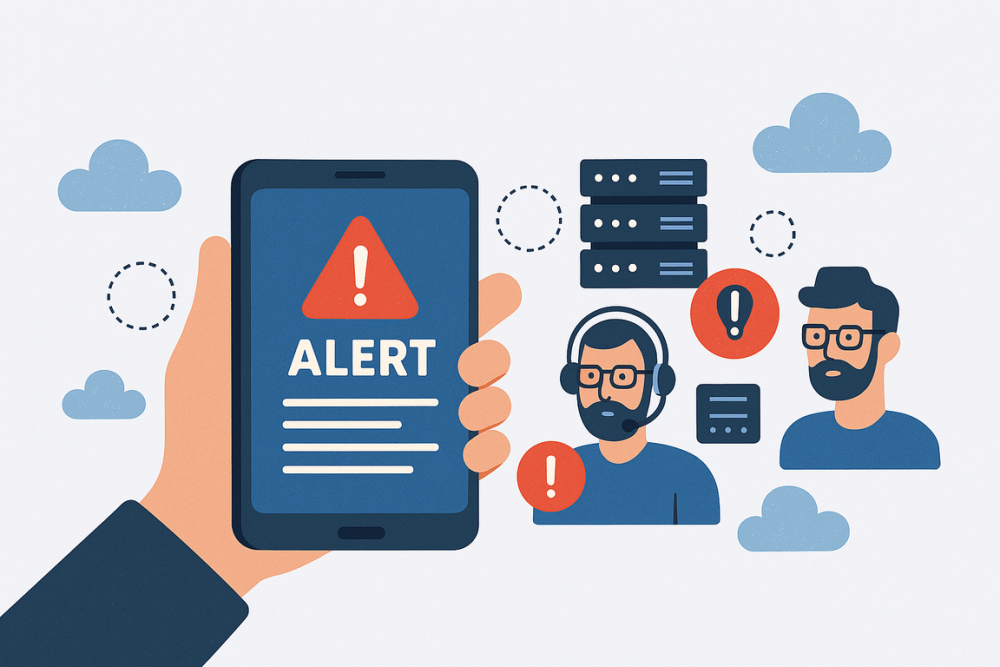
For example, an unusually high reading during a period when nobody is home might indicate that an appliance has been left operating. A sudden change in overnight consumption could also signal a new device, altered schedule, or equipment problem.
Smart alerts are especially helpful for households with vacation properties, rental units, elderly occupants, or large numbers of appliances. Instead of waiting until the next billing cycle to discover unusual consumption, homeowners can investigate sooner.
Combining Monitoring With Smart Home Technology
Energy monitoring becomes even more useful when combined with automation. A smart home can potentially respond to energy conditions by adjusting selected devices according to predefined rules.
For example, a homeowner might establish schedules for water heating, control selected lighting automatically, or turn off designated equipment during periods when it is not required. However, adding more connected devices does not automatically guarantee lower energy use. Smart devices themselves can consume standby electricity, so automation should focus on meaningful loads rather than creating unnecessary gadget complexity.
A sensible strategy is to automate actions that are repetitive and predictable. This reduces the chance that energy-saving intentions will be forgotten during busy days.
Energy Monitoring and Renewable Power
Home energy monitoring can also support households using solar panels or battery storage. Instead of viewing electricity consumption separately from generation, homeowners can examine how much energy the property produces, consumes, stores, or draws from the grid.
This information can help households understand whether daytime electricity use aligns with solar generation. Flexible activities such as laundry, dishwashing, or water heating may sometimes be scheduled around available renewable generation, depending on the home’s equipment and local conditions.
whitemagz com notes that this broader approach changes energy management from simply reducing consumption to optimizing how electricity is used. The goal can become a balance between efficiency, comfort, renewable generation, and household demand.
Privacy and Installation Considerations
Energy data can reveal patterns about household activity. Consumption information may indicate when people are home, sleeping, traveling, or using particular appliances. Therefore, homeowners should understand how a monitoring system stores, processes, and shares collected data.
Installation is another important consideration. Devices connected directly to electrical panels should generally be installed by appropriately qualified professionals. Incorrect installation can create electrical hazards and may compromise measurement accuracy.
Before purchasing a system, homeowners should consider:
- Measurement accuracy
- Data storage and privacy controls
- App reliability
- Compatibility with the electrical system
- Installation requirements
- Notification features
- Long-term operating costs
- Ability to export or review historical data
The cheapest monitor is not necessarily the best choice if its information is difficult to interpret or unreliable.
How to Turn Data Into Real Savings
The biggest mistake is treating an energy dashboard as the final goal. A monitor cannot reduce consumption simply by displaying a number. Savings occur when the information leads to better decisions.
A practical process looks like this:
- Establish a normal consumption baseline.
- Identify unusually large or continuous loads.
- Investigate the cause of each major pattern.
- Change one behavior or appliance setting.
- Monitor the result for several days or weeks.
- Compare the new pattern with the original baseline.
- Keep changes that provide useful savings without reducing comfort.
This method makes energy management measurable. It also prevents homeowners from making assumptions based on a single unusual day.
Why Monitoring Is Becoming More Relevant
Growing appliance ownership, smart meters, renewable energy systems, electric vehicles, and connected-home technologies are making residential electricity management more complex. Households have more opportunities to consume electricity efficiently, but they also have more devices capable of increasing demand.
Research into Indian residential energy management has shown how IoT-enabled monitoring, load scheduling, and demand-response strategies can be combined to improve energy efficiency and manage costs. Government initiatives around smart metering also emphasize consumption tracking as a benefit for consumers.
As these technologies become more common, homeowners may increasingly move from simply receiving electricity bills toward actively managing household energy behavior.
Conclusion
Home energy monitoring systems offer something that traditional electricity bills cannot always provide: visibility into how, when, and where energy is being consumed. By revealing high-demand appliances, standby consumption, unusual usage patterns, and peak periods, these systems can give homeowners the information needed to make practical changes. whitemagz com highlights an important principle: better energy management begins with better information. However, monitoring should not be viewed as a guaranteed source of savings on its own. The financial benefit comes from acting on what the data reveals.