

Privacy has become one of the most important challenges in the digital economy. Every time people log into a service, verify an identity, make a payment, or access restricted information, some form of data exchange usually takes place. Traditional verification methods often require users to reveal more information than is actually necessary. Zero-knowledge proofs offer a different approach: they allow one party to prove that a statement is true without exposing the underlying information used to prove it.
This concept is gaining attention across cybersecurity, blockchain, financial technology, digital identity, and decentralized applications. Instead of handing over an entire document to demonstrate one fact, a person could potentially prove only the required fact. For example, someone could prove that they meet an age requirement without disclosing their exact birth date. As privacy expectations increase, whitemagz highlights how this cryptographic technique could help create digital systems where verification and confidentiality work together rather than competing with each other.
What Are Zero-Knowledge Proofs?
A zero-knowledge proof is a cryptographic method that enables a prover to demonstrate the truth of a particular claim to a verifier without revealing the secret information behind that claim. The verifier does not need to see the actual secret. Instead, they receive mathematical evidence that allows them to confirm whether the claim is valid.
Imagine a locked digital vault containing sensitive information. A conventional verification process might require opening the vault and showing its contents. A zero-knowledge approach allows the owner to demonstrate that the required information exists or satisfies certain conditions without opening the vault itself.
Three fundamental properties generally define a zero-knowledge proof:
- Completeness: A truthful statement can be successfully proven.
- Soundness: A false statement should not be accepted as valid.
- Zero knowledge: The verifier learns nothing significant about the secret beyond the validity of the claim.
These principles make the technology particularly attractive for applications where verification is necessary but unnecessary disclosure creates privacy or security risks.
How the Verification Process Works
Although the mathematics behind modern zero-knowledge systems can become highly sophisticated, the basic concept is easier to understand. A prover possesses secret information and wants to convince a verifier that a particular statement is true. Rather than revealing the secret itself, the prover generates cryptographic evidence.
The verifier then checks that evidence. If the proof satisfies the required mathematical conditions, the verifier accepts the claim. The underlying secret remains hidden.
Consider a simple digital identity example. Suppose an online service needs to determine whether a customer is over a certain age. Traditional verification could require a copy of an identity document containing the person’s name, address, birth date, photograph, and other information. A zero-knowledge system could instead allow the customer to prove only that they satisfy the age requirement.
The distinction is important because privacy is not simply about protecting data after it has been collected. It is also about reducing the amount of sensitive information that needs to be collected in the first place.
Why Zero-Knowledge Proofs Matter for Privacy
Modern organizations collect enormous amounts of personal and behavioral information. Even when businesses have legitimate reasons to verify customers, storing unnecessary information creates additional risks. Databases can become targets for attackers, employees may misuse access, and information can remain stored long after its original purpose has disappeared.
Zero-knowledge proofs introduce a privacy-minimizing model. Instead of asking, “Can we collect this information securely?” organizations can begin asking, “Do we need to collect this information at all?”
This shift could have several benefits:
- Less sensitive information stored in centralized databases
- Reduced exposure during identity verification
- Greater user control over personal information
- More privacy-preserving digital transactions
- Reduced consequences from certain database breaches
- More selective disclosure of identity attributes
According to the privacy-focused perspective explored by whitemagz, the strongest value of zero-knowledge technology may come from changing the architecture of digital verification itself.
Zero-Knowledge Proofs and Digital Identity
Digital identity is one of the clearest areas where zero-knowledge proofs could make a practical difference. Online services frequently need to confirm attributes such as age, residency, membership status, professional qualifications, or eligibility.
The problem is that proving one attribute can involve revealing many others.
For instance, a person may need to demonstrate that they live within an eligible region to access a particular service. A conventional process might request a full address. A privacy-preserving system could potentially prove that the person belongs to the required geographic area without exposing their exact street address.
Selective Disclosure Creates Better Control
Selective disclosure means sharing only the information necessary for a particular interaction. This principle is especially valuable in an environment where identity documents contain far more information than most transactions require.
A zero-knowledge-enabled identity system could potentially allow users to prove:
- They are above a specified age.
- They hold a valid credential.
- They belong to an authorized organization.
- They have completed a required certification.
- They satisfy a particular eligibility condition.
The service receives verification rather than an unnecessary collection of personal details.
Applications in Financial Technology
Financial services require extensive verification because institutions must manage fraud, regulatory requirements, account security, and transaction risks. However, financial processes also involve highly sensitive personal and commercial information.
Zero-knowledge proofs could help financial systems verify specific conditions while minimizing exposure of underlying data. A financial application, for example, could potentially verify that a transaction meets certain requirements without exposing every piece of information involved in the customer’s financial profile.
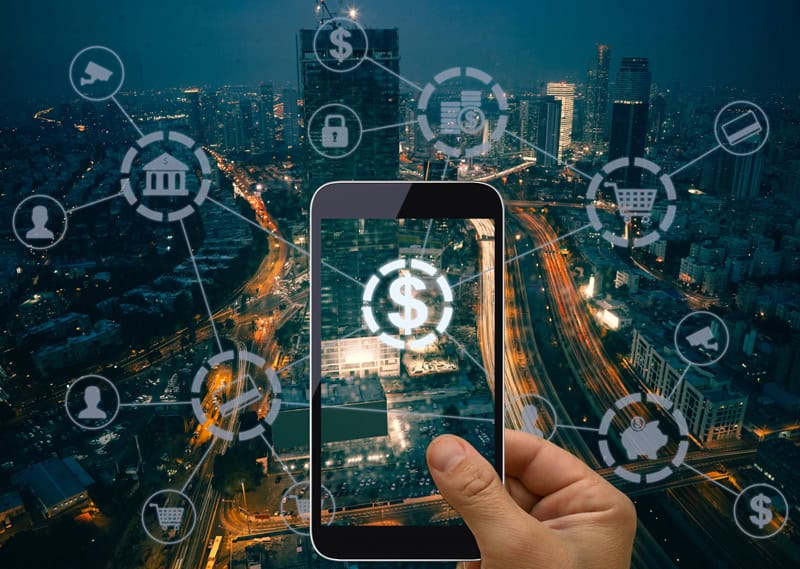
The technology could also become useful in lending, where an applicant may need to prove that they meet certain financial criteria. Instead of exposing complete financial records, cryptographic proofs could theoretically establish that required conditions have been satisfied.
This does not mean zero-knowledge proofs eliminate regulation or financial due diligence. Rather, they could provide additional technical tools for satisfying verification requirements while reducing unnecessary disclosure.
Zero-Knowledge Proofs in Blockchain Networks
Blockchain technology is transparent by design, but transparency can create privacy challenges. Public transaction records can expose balances, transaction histories, or relationships between addresses depending on the network and application.
Zero-knowledge techniques can introduce privacy-preserving mechanisms into blockchain systems. A network can potentially verify that a transaction follows predefined rules without publishing every underlying detail.
This creates an interesting balance between accountability and confidentiality. A system can retain cryptographic assurance that rules were followed while limiting the amount of information visible to observers.
Private Verification Without Removing Trust
Blockchain environments rely heavily on verification. Nodes need confidence that transactions are valid and that users are not creating unauthorized states or violating protocol rules.
Zero-knowledge proofs can provide mathematical evidence that specific conditions have been satisfied. In some architectures, this can support privacy while maintaining verifiability.
The result is not complete invisibility. Instead, it is controlled visibility, where certain facts can be confirmed without exposing all of the information used to establish those facts.
Zero-Knowledge Proofs and Cybersecurity
Cybersecurity is another major area where the technology could prove valuable. Authentication systems traditionally depend on secrets such as passwords, codes, tokens, or cryptographic credentials. If sensitive authentication information is exposed, attackers may gain unauthorized access.
A zero-knowledge authentication model can allow a user to demonstrate possession of a secret without transmitting the secret itself. This can reduce the amount of valuable information exchanged during authentication.
However, zero-knowledge proofs should not be treated as a universal cybersecurity solution. Secure implementation still depends on sound cryptography, appropriate key management, secure software, careful protocol design, and effective operational controls.
The cryptographic proof is only one component of a broader security architecture.
Comparing Traditional Verification With Zero-Knowledge Verification
| Aspect | Traditional Verification | Zero-Knowledge Approach |
|---|---|---|
| Data sharing | Often shares underlying information | Can verify claims without exposing the secret |
| Privacy | Depends heavily on data handling | Designed to minimize unnecessary disclosure |
| Storage risk | Sensitive data may need to be retained | Less information may need to be stored |
| Verification | Direct inspection of information | Cryptographic validation |
| User control | Often limited | Can support selective disclosure |
| Complexity | Usually easier to understand | Requires specialized cryptographic infrastructure |
The comparison demonstrates why zero-knowledge proofs are attracting attention. Traditional verification is not inherently insecure, but it can create unnecessary data exposure. Zero-knowledge techniques attempt to separate the act of proving something from the act of revealing everything behind that proof.
Challenges Holding the Technology Back
Despite its potential, zero-knowledge technology is not effortless to deploy. One major challenge is complexity. Designing secure cryptographic protocols requires specialized expertise, and implementation mistakes can undermine the protection the system is intended to provide.
Performance can also matter. Some proof-generation processes may require substantial computational resources, particularly when complicated statements must be verified. Advances in cryptographic engineering and specialized hardware are helping address these issues, but efficiency remains an important consideration.
Other challenges include:
- Difficult implementation and auditing requirements
- Limited interoperability between different systems
- User experience concerns
- Complex cryptographic concepts
- Infrastructure and development costs
- Regulatory uncertainty in some applications
- Difficulty explaining privacy-preserving verification to nontechnical users
For broader adoption, the technology must become easier for developers and organizations to integrate without sacrificing security.
The Role of Developers and Businesses
Businesses exploring zero-knowledge systems should begin with specific privacy problems rather than adopting the technology simply because it is technologically impressive. The strongest use cases are those where verification is essential but revealing the underlying information creates unnecessary risk.
Developers also need to consider the complete lifecycle of a proof system. Generating a proof is only one part of the process. Applications must securely manage credentials, handle compromised devices, protect private keys, maintain reliable verification infrastructure, and provide understandable user interfaces.
whitemagz emphasizes an important principle surrounding privacy technology: stronger cryptography does not automatically produce stronger privacy. Privacy depends on how systems are designed, what information they request, what they store, and how users interact with them.
The Future of Privacy-Preserving Verification
As digital interactions become increasingly interconnected, proving eligibility or authenticity without exposing unnecessary information could become a valuable capability. Zero-knowledge proofs may contribute to privacy-preserving identity, confidential transactions, secure authentication, private analytics, and decentralized applications.

Future systems could make privacy-preserving verification almost invisible to users. Instead of understanding the complicated mathematics, people may simply approve a request to prove a particular attribute. Behind the interface, cryptographic mechanisms could establish the required evidence without transferring the underlying secret.
This could lead to a broader change in digital design. Privacy may increasingly become an architectural feature rather than an optional setting added after a system has already been built.
Why Zero-Knowledge Proofs Could Redefine Data Sharing
The most important idea behind zero-knowledge proofs is surprisingly simple: verification does not always require disclosure.
For decades, digital services have often treated information sharing as the natural price of authentication and verification. If a company needed to know something about a customer, collecting the relevant data seemed unavoidable. Cryptographic proof systems challenge that assumption.
A person should not necessarily need to reveal their complete identity to prove one identity attribute. A business should not always need to expose its complete financial information to demonstrate that it meets a particular condition. A blockchain application may not need to publish every transaction detail to establish that its rules were followed.
This model could encourage organizations to rethink data minimization from the ground up. Rather than collecting large datasets and attempting to protect them indefinitely, systems can potentially verify specific claims while keeping sensitive information private.
Conclusion
Zero-knowledge proofs represent a major shift in how digital trust can be established. Instead of treating information disclosure as the default method of verification, they provide a cryptographic path toward proving facts while keeping underlying data concealed. Their potential reaches across digital identity, financial technology, blockchain, cybersecurity, authentication, and privacy-focused applications. The technology still faces important challenges, including complexity, performance requirements, implementation risks, interoperability, and the need for strong security practices. Nevertheless, its fundamental principle is powerful: people and organizations should be able to prove what is necessary without automatically revealing everything else.