

Cashless shopping has moved far beyond simply tapping a card or scanning a QR code. Consumers increasingly expect payments to be quick, secure, and almost effortless. Biometric payment systems represent the next stage of this evolution by connecting a transaction with a person’s unique physical characteristics, such as a fingerprint, face, palm pattern, or iris. Instead of remembering a password or carrying a physical card, shoppers can potentially authorize purchases through something they already have with them: themselves.
The appeal is easy to understand. A customer could enter a store, select products, approach the checkout, and authenticate a purchase with a quick biometric scan. For retailers, this could shorten queues and reduce friction at the point of sale. For financial institutions, biometric authentication offers another layer of identity verification.
whitemagz analyzes this development as part of a broader transformation in how consumers interact with digital commerce. However, the technology is not simply about convenience. Its long-term success will depend on security, privacy, accessibility, infrastructure, and consumer trust.
What Are Biometric Payment Systems?
Biometric payment systems use biological or behavioral characteristics to verify a customer’s identity before authorizing a payment. Common methods include fingerprint recognition, facial recognition, iris scanning, voice recognition, and palm-based identification.
The basic concept is straightforward. During enrollment, a biometric system creates a mathematical representation, commonly called a biometric template, associated with an authorized payment account or device. When the customer attempts to make a transaction, a new biometric sample is captured and compared with the authorized template.
If the verification succeeds, the payment can proceed through the connected payment infrastructure.
Unlike a traditional password, a biometric characteristic is naturally tied to the individual. That can make authentication more convenient, although it does not automatically make every biometric payment implementation secure. The architecture surrounding the biometric data is equally important.
How Biometric Payments Work at Checkout
A biometric transaction may look almost instantaneous to the shopper, but several processes can occur behind the scenes.
A typical payment journey can involve:
- Enrollment: The customer registers an approved biometric credential.
- Identity verification: A scanner or camera captures the customer’s biometric characteristic.
- Matching: The captured information is compared with an authorized template.
- Payment authorization: The payment system confirms that the transaction can proceed.
- Transaction completion: Funds are transferred and the merchant receives confirmation.
The most secure designs aim to avoid unnecessary exposure of raw biometric information. In some device-based systems, biometric verification occurs locally, while the payment network receives confirmation that authentication succeeded.
This distinction matters because biometric information is fundamentally different from a password. A compromised password can usually be replaced. A person’s fingerprint or facial characteristics cannot simply be changed.
Why Consumers Are Interested in Biometric Payments
Convenience is one of the strongest reasons biometric payment systems attract attention. Modern shoppers often move between smartphones, digital wallets, cards, apps, and loyalty programs during a single purchase. Each additional authentication step can create friction.
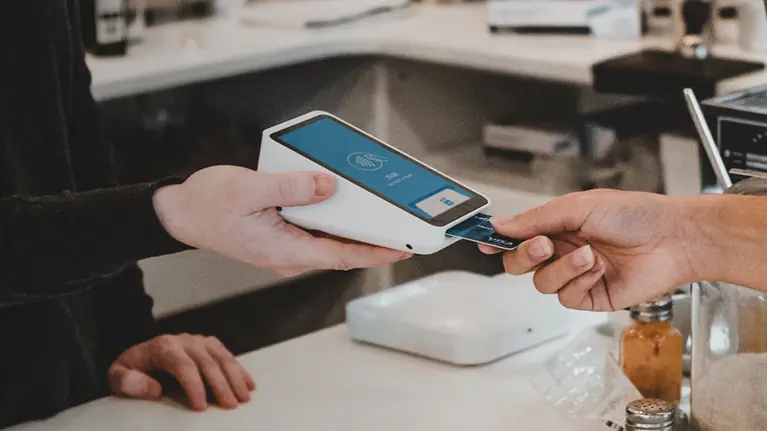
Imagine purchasing groceries during a busy evening. Instead of searching for a wallet, opening a payment application, entering a passcode, or finding a card, a shopper could authenticate using a supported biometric method. The transaction could be completed within seconds.
The technology may also help customers who struggle to remember passwords or frequently forget physical cards.
whitemagz views this convenience as an important factor behind the growth of identity-based payment experiences. Yet convenience alone will not determine adoption. Consumers must also believe that their biometric information is being handled responsibly.
Key Benefits for Modern Retail
Biometric payments could provide several advantages for both customers and merchants.
Faster Checkout
One of the clearest benefits is speed. When authentication is integrated directly into the payment experience, customers may complete purchases with fewer physical steps.
Shorter transactions can be especially valuable in:
- Supermarkets
- Cafés and restaurants
- Transportation hubs
- Stadiums
- Convenience stores
- Large retail chains
- Self-service kiosks
Reducing checkout friction can also help retailers handle higher customer volumes without proportionally increasing checkout infrastructure.
Stronger Authentication
Biometric verification can provide an additional authentication factor when combined with other security measures. Fingerprints and facial characteristics are difficult to casually share in the same way as a PIN or password.
However, biometrics should not be treated as an invincible security mechanism. Presentation attacks, compromised devices, poor sensors, stolen credentials, and weak backend controls can still create vulnerabilities.
Greater Convenience
The biggest consumer benefit may be the elimination of repetitive authentication steps. A well-designed system can make security feel almost invisible.
This is particularly valuable in an environment where customers expect digital services to work instantly.
Potential Fraud Reduction
Biometric authentication can help establish whether the person attempting a transaction matches an authorized user. When combined with tokenization, encryption, device security, and transaction monitoring, it can become part of a layered fraud-prevention strategy.
Biometric Payment Methods Compared
Different biometric technologies have different strengths and limitations. Retailers need to consider accuracy, cost, environmental conditions, privacy expectations, and customer acceptance before selecting an approach.
| Biometric Method | Main Advantage | Potential Challenge | Suitable Use |
|---|---|---|---|
| Fingerprint | Familiar and relatively quick | Sensor quality and physical contact | Mobile payments, retail terminals |
| Facial Recognition | Contactless and convenient | Lighting, privacy concerns | Stores, kiosks, mobile devices |
| Palm Recognition | Contactless and distinctive | Specialized hardware | Retail environments |
| Iris Scanning | High identification precision | Hardware and user-positioning requirements | High-security environments |
| Voice Recognition | Hands-free interaction | Noise and voice imitation risks | Assisted digital services |
No single method is ideal for every shopping environment. The future may instead involve flexible systems that allow consumers to choose from several authentication methods.
The Security Architecture Matters Most
A biometric payment system should not be judged only by the scanner used at checkout. Its overall architecture determines how safely information moves through the payment process.
Modern payment security can involve multiple layers, including:
- Encryption
- Tokenization
- Secure hardware
- Device authentication
- Transaction monitoring
- Fraud detection
- Multi-factor authentication
- Access controls
- Real-time risk analysis
Digital wallets already demonstrate how multiple security technologies can work together. Tokenization can reduce the need to expose actual card details, while biometric authentication can verify the person authorized to use the device or payment credential.
whitemagz highlights the importance of viewing biometric payments as part of a broader security ecosystem rather than treating the biometric scan as a complete security solution.
Privacy Is the Biggest Consumer Question
Security and privacy are closely connected, but they are not identical.
Consumers may accept biometric payments more readily when they understand what information is collected, where it is processed, how long it is retained, and who can access it.
A responsible biometric payment system should follow principles such as:
- Collect only necessary information.
- Minimize retention periods.
- Clearly explain consent.
- Restrict access to biometric data.
- Protect stored templates using strong security controls.
- Provide alternative payment methods.
- Maintain transparent data-use policies.
Privacy becomes especially important when biometric authentication is connected with purchasing behavior. A payment transaction can reveal what a person purchased, where they shopped, when they visited, and potentially other behavioral patterns.
Combining identity data with detailed commercial profiles could create significant privacy concerns if governance is weak.
The Importance of Consumer Trust
Technology adoption depends on more than technical performance. People need to feel comfortable using it.
A customer may happily use fingerprint authentication on a personal smartphone but hesitate to scan their face or palm at a public retail terminal. The difference comes down to perceived control.
Retailers can build trust by clearly communicating:
- Why biometric authentication is being used
- What data is processed
- Whether information leaves the device
- How customers can opt out
- What happens when authentication fails
- Which alternative payment options are available
Trust can become a competitive advantage. Businesses that explain biometric payment practices clearly may have an easier time encouraging adoption than those that simply introduce scanners without adequate communication.
Accessibility and Inclusion Must Be Considered
The future of cashless shopping should not assume that every customer can or wants to use the same biometric technology.
Some shoppers may have difficulty using fingerprint scanners. Others may not be comfortable with facial recognition. Environmental factors can also affect performance. Gloves, damaged fingertips, poor lighting, camera positioning, and other conditions can interfere with authentication.
For this reason, biometric payments should complement—not eliminate—alternative payment options.
A well-designed retail environment should allow customers to use cards, mobile wallets, PINs, QR payments, or other approved methods when biometric authentication is unavailable or undesirable.
How Retailers Could Use Biometric Payments
Retailers can potentially integrate biometric authentication into several areas beyond the traditional checkout counter.
For example, biometric verification could support:
- Express checkout: Customers authenticate quickly at dedicated payment points.
- Self-checkout: Biometric confirmation can add another identity layer.
- Loyalty programs: Customers could connect purchases with loyalty profiles after authorization.
- Age-restricted purchases: Biometric identity systems could potentially support regulated age verification where legally permitted.
- Subscription shopping: Recurring purchases could use stronger identity verification.
- Personalized retail: Authorized identity recognition could connect customers with selected services.
These applications demonstrate why biometric payments may become more than another way to pay. They could become part of a wider identity layer within physical and digital commerce.
The Role of Artificial Intelligence
Artificial intelligence can strengthen biometric payment systems by improving recognition, detecting unusual behavior, and identifying suspicious transaction patterns.
Machine learning models can analyze signals that traditional rule-based systems might overlook. For example, a payment system could consider whether a transaction’s location, device, purchase value, and authentication behavior appear consistent with previous activity.
However, AI also introduces additional responsibilities. Models must be tested for accuracy, bias, security weaknesses, and unexpected behavior.
Biometric systems must also be designed to distinguish legitimate users from presentation attacks and manipulated biometric inputs.
The goal should not be to replace traditional payment security with AI or biometrics. Instead, these technologies can work together as multiple defensive layers.
Challenges That Could Slow Adoption
Despite the potential advantages, biometric payment systems face several obstacles.
Privacy Concerns
Consumers may hesitate to provide biometric information if they do not understand how it will be handled.
Implementation Costs
Retailers may need specialized terminals, software, security infrastructure, and employee training.
Technical Reliability
Authentication can fail because of poor sensors, environmental conditions, connectivity problems, or inaccurate matching.
Regulatory Complexity
Biometric information is highly sensitive, and businesses must comply with applicable privacy, financial, and consumer-protection requirements.
Security Threats
Attackers may target biometric databases, payment terminals, devices, or supporting infrastructure. Security therefore has to extend across the entire system.
What the Future of Biometric Shopping Could Look Like
The next generation of cashless shopping is likely to become increasingly invisible. Customers may not think about individual payment technologies at all. Instead, authentication could happen naturally through devices, wearables, biometric sensors, and secure digital identities.
Future systems could combine several signals rather than relying on one biometric characteristic. A payment might consider a user’s biometric match, trusted device, transaction behavior, location, and other risk indicators before approval.
This approach could create a more adaptive payment environment. Low-risk transactions might move almost instantly, while unusual purchases could trigger additional verification.
whitemagz sees this transition as a move toward frictionless commerce, where security operates quietly in the background while consumers experience a faster checkout journey.
The most successful systems, however, will likely be those that balance automation with user control. Convenience cannot come at the expense of privacy or accessibility.
Preparing Businesses for Biometric Commerce
Retailers considering biometric payment technology should approach implementation strategically rather than adopting it simply because it is innovative.
A practical preparation plan can include:
- Assessing the specific customer experience problem being solved.
- Selecting biometric technology appropriate for the environment.
- Evaluating privacy and security risks before deployment.
- Testing authentication accuracy under real-world conditions.
- Providing non-biometric alternatives.
- Training employees to assist customers.
- Establishing clear incident-response procedures.
- Regularly reviewing security controls.
- Communicating data practices transparently.
This approach can help businesses avoid turning a promising innovation into a source of customer frustration.
Conclusion
Biometric payment systems have the potential to redefine the way people pay for everyday products and services. By combining identity verification with digital payment infrastructure, they can make checkout faster, reduce dependence on physical cards, and introduce additional layers of authentication. Yet the future of biometric commerce will not be decided by speed alone. Privacy, security, reliability, accessibility, regulation, and consumer choice will be equally important. A technically impressive payment system can still fail if customers do not trust it. whitemagz emphasizes that the strongest future for biometric shopping lies in responsible innovation: using biometrics where they genuinely improve the customer experience while protecting sensitive information through strong technical and organizational safeguards.

.jpg&description=Explore how biometric payment systems are transforming cashless shopping through faster checkout, stronger security, and seamless authentication.)