

For decades, digital experiences have been built around a familiar formula: look at a screen, move a cursor, tap an icon, and consume information through a flat interface. Spatial computing is challenging that model by allowing digital content to exist within physical space or surround users inside immersive environments. Instead of treating the screen as the center of interaction, spatial technologies use depth, movement, voice, gestures, sensors, and three-dimensional objects to create more natural experiences.
The evolution is being driven by improvements in artificial intelligence, computer vision, sensors, 3D rendering, wearable hardware, and real-time spatial mapping. Current industry research also points toward growing applications in healthcare, manufacturing, automotive, retail, education, entertainment, and enterprise collaboration.
In this changing environment, whitemagz highlights how spatial computing can move technology from something people simply view into something they can actively explore and manipulate.
What Makes Spatial Computing Different?
Spatial computing is broader than virtual reality alone. It includes technologies that allow computers to understand environments, recognize objects, interpret movement, and position digital information in relation to the physical world.
The concept generally brings together:
- Augmented reality for digital overlays
- Virtual reality for fully simulated environments
- Mixed reality for interactive physical-digital experiences
- Computer vision for environmental awareness
- Artificial intelligence for contextual understanding
- Spatial audio for directional sound
- 3D modeling and visualization
- Sensors for movement and depth detection
- Wearable devices and smart glasses
The important difference is interaction. A traditional application might display a three-dimensional model inside a rectangular window. A spatial application can allow that model to appear as though it occupies the room around the user. The person can walk around it, examine different angles, resize it, or interact with it using gestures or voice.
That shift creates opportunities for experiences that feel less like operating software and more like interacting with an environment.
Key Spatial Computing Trends Shaping 2026
The spatial computing landscape is developing quickly, but several trends stand out because they have practical implications beyond entertainment.
AI-Powered Spatial Awareness
Artificial intelligence is becoming an important layer in spatial experiences. Instead of merely displaying digital objects, systems can increasingly interpret what surrounds the user and respond according to context.
For example, an intelligent spatial assistant could recognize a machine component, identify its position, retrieve relevant instructions, and display guidance exactly where a technician needs it. In education, a system could recognize an anatomical model and provide additional information when a learner focuses on a particular structure.
This combination of AI and spatial perception is particularly important because spatial computing becomes more useful when digital content understands its surroundings. Research into current market trends identifies AI and computer vision as important growth areas for spatial systems.
Smart Glasses Becoming More Practical
Head-mounted technology has historically faced problems involving weight, battery life, comfort, cost, and social acceptance. The next generation of smart glasses is attempting to make spatial interaction less intrusive.
Rather than placing users inside an entirely virtual environment, lightweight glasses can provide contextual information while keeping people connected with their surroundings. Directions, notifications, translation, product information, maintenance instructions, and communication tools could appear without requiring users to constantly look down at a smartphone.
This approach could be particularly valuable in professional environments where workers need both hands free.
The growing interest in AI-powered smart glasses is already being identified as a significant development within the broader spatial technology ecosystem.
Spatial Computing Beyond the Traditional Screen
The biggest change may not be the disappearance of screens but the diversification of digital interfaces. Screens will continue to serve important purposes, yet spatial computing creates additional ways to access information.
Imagine an architect examining a building model at full scale, a medical student walking around a virtual representation of an organ, or a warehouse employee receiving visual instructions over physical shelves. These scenarios transform information from something displayed into something situated.
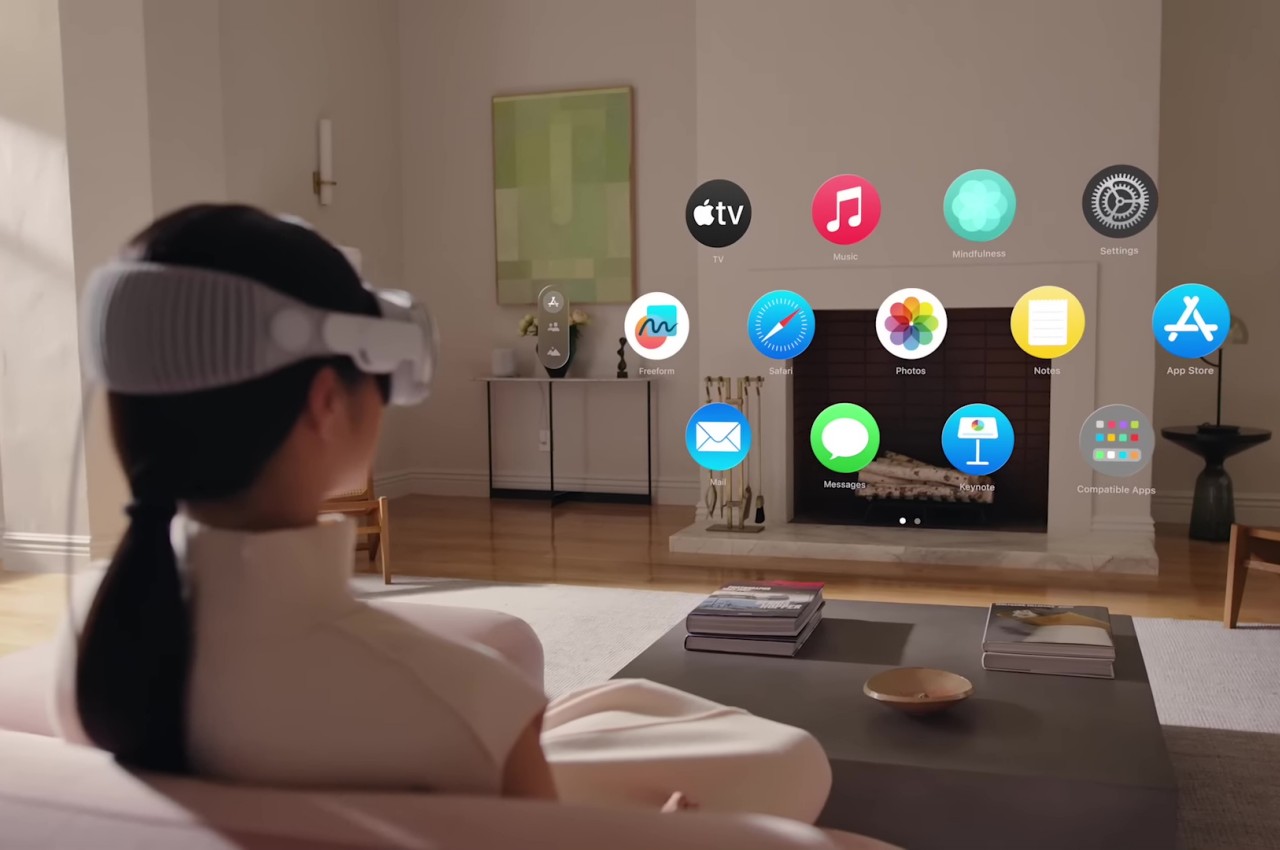
whitemagz presents this transition as a movement toward more contextual computing, where the surrounding environment becomes part of the interface.
This does not mean every digital task needs immersive technology. Reading a short message may remain easier on a phone. Writing a long report may still be more efficient on a laptop. Spatial computing becomes especially valuable when information benefits from depth, scale, movement, location, or physical context.
How Different Industries Can Benefit
Spatial computing is increasingly being evaluated according to practical outcomes rather than futuristic demonstrations. Current enterprise applications include training, design, remote assistance, manufacturing, healthcare, education, and field operations.
| Industry | Spatial Computing Application | Potential Benefit |
|---|---|---|
| Healthcare | 3D medical visualization | Better understanding and training |
| Manufacturing | Digital twins and guided workflows | Faster design and fewer errors |
| Retail | Virtual product visualization | More engaging shopping |
| Education | Interactive 3D lessons | Stronger visual learning |
| Construction | AR project overlays | Better planning and coordination |
| Automotive | Immersive design simulation | Faster product development |
| Logistics | AR navigation and picking | Improved workflow efficiency |
| Entertainment | Immersive environments | Greater audience engagement |
Healthcare and Medical Training
Healthcare is one of the strongest areas for spatial applications because medical information is inherently three-dimensional. Traditional diagrams can explain anatomy, but interactive 3D models can offer a much richer understanding.
Students can examine organs from multiple angles, simulate procedures, and explore complex structures without relying exclusively on physical specimens. Medical professionals can also use immersive environments for training and simulation.
The technology can potentially improve learning by allowing users to experience information spatially rather than memorizing flat illustrations. Research forecasts continue to identify healthcare and immersive medical training as important opportunities for spatial computing.
Manufacturing and Engineering
Manufacturing environments can benefit from digital twins, virtual prototypes, guided assembly, and remote technical assistance. Engineers can examine a digital representation of equipment before physically modifying it.
Workers can potentially receive instructions positioned near the relevant machine component instead of consulting separate manuals. Remote experts can also assist technicians by observing a physical environment and providing contextual guidance.
This is where spatial computing moves beyond entertainment. The objective becomes reducing friction in real-world processes.
Retail and Immersive Shopping
Retail is another promising area. Consumers can visualize furniture inside their homes, explore virtual showrooms, examine products from multiple perspectives, or interact with digital displays layered over physical stores.
Rather than asking customers to imagine how an item might look in a particular environment, spatial technology can provide a visual approximation.
Immersive commerce is also emerging as a market opportunity, with industry forecasts identifying virtual shopping and real-time product visualization as growth drivers.
The Rise of Spatial Workspaces
Traditional digital workspaces usually rely on windows, tabs, folders, and application panels. Spatial workspaces can reorganize information around the user.
A designer might place reference materials on one side, a 3D model in front, and collaboration tools nearby. A project team could inspect the same virtual object while communicating from different locations.
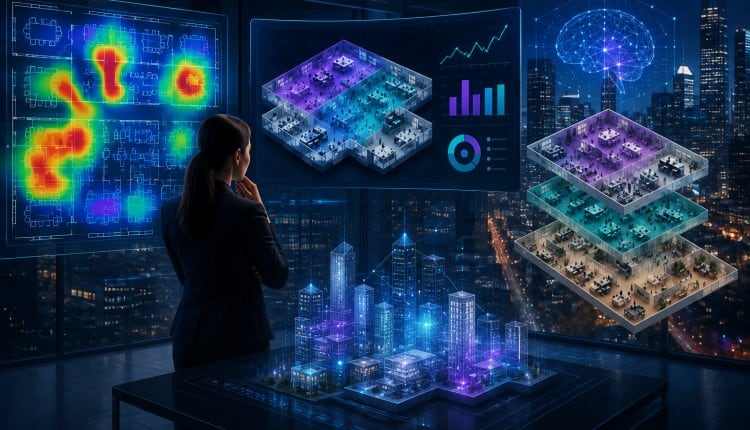
This could be especially useful for professions involving complex visual information. Instead of repeatedly switching between applications, users could arrange digital resources around a shared spatial environment.
According to recent enterprise research, organizations are already emphasizing capabilities such as 3D modeling, real-time collaboration, and context-aware insights when evaluating spatial computing.
whitemagz sees this as an important distinction: the future of spatial computing is likely to be measured by how effectively it solves real problems rather than by how visually impressive a device appears.
Spatial Audio Adds Another Dimension
Visual immersion receives most of the attention, but sound is equally important. Spatial audio can make digital environments feel more realistic by creating directional and distance-based sound.
For example, in a collaborative virtual workspace, a speaker positioned to the user’s left can sound as though the voice originates from that direction. In entertainment, environmental sounds can change based on movement. In training simulations, audio cues can provide information without forcing users to look at a particular interface.
This creates a more complete digital environment because users are no longer receiving information exclusively through their eyes.
Natural Interaction Will Become More Important
The next generation of spatial experiences is likely to focus heavily on reducing the need for conventional controls.
Potential interaction methods include:
- Hand gestures
- Eye tracking
- Voice commands
- Head movement
- Physical controllers
- Haptic feedback
- Context-aware AI assistance
The goal is not simply to replace a mouse with a gesture. The deeper objective is to make interaction feel appropriate to the task.
For instance, selecting a virtual object with a hand movement may be useful when designing a 3D model. Voice commands could be more effective while repairing equipment. Eye tracking might help users navigate large volumes of visual information.
The best spatial interfaces will therefore combine multiple interaction methods instead of depending on one universal control system.
Challenges That Could Slow Adoption
Despite strong potential, spatial computing still faces practical barriers. Devices can be expensive, applications may require specialized development skills, and users may need time to become comfortable with new interaction methods.
Privacy is another major consideration. Spatial devices can potentially collect information about environments, movement, surroundings, and user behavior. Organizations therefore need clear policies around data collection, storage, security, and consent.
Other challenges include:
- Limited battery life on some wearable devices
- Hardware comfort during extended use
- High implementation costs
- Fragmented software ecosystems
- Lack of standardized workflows
- Employee training requirements
- Concerns about privacy and surveillance
- Difficulty demonstrating return on investment
These limitations mean businesses should avoid adopting spatial computing simply because it is fashionable. A successful implementation should begin with a specific problem and determine whether spatial technology provides a meaningful improvement.
Why Spatial Computing Needs Better Content
Hardware alone cannot create a successful spatial experience. Developers also need useful three-dimensional content, intuitive interfaces, accurate spatial data, and experiences designed specifically for the environment.
A poorly designed spatial application can actually make a task harder. Placing unnecessary information throughout a user’s field of view may create distraction instead of productivity.
Successful spatial experiences should therefore prioritize clarity. Digital elements need to appear where they make sense, respond naturally to user actions, and disappear when they are no longer needed.
This is where content strategy becomes increasingly important. Companies will need to think about spatial storytelling, 3D information architecture, interaction design, and context-aware communication.
What the Future Could Look Like
The future of spatial computing is unlikely to be defined by a single device. Instead, it may involve an ecosystem of glasses, headsets, smartphones, sensors, cloud services, AI models, spatial databases, and connected physical environments.
The distinction between physical and digital spaces could become increasingly subtle. A retail store might recognize customers and provide contextual product information. A factory could maintain a continuously updated digital twin. A classroom might combine physical objects with interactive virtual models.
At the same time, not every environment will become fully immersive. The strongest applications will probably use the minimum amount of spatial technology necessary to improve an experience.
whitemagz emphasizes the broader idea that spatial computing is not simply about creating another type of screen. It is about changing where computing happens and how humans interact with digital information.
How Businesses Can Prepare for Spatial Computing
Organizations interested in this technology should begin with practical experimentation rather than attempting a massive transformation immediately.
A sensible strategy can include:
- Identify workflows that depend heavily on visual information.
- Test one specific spatial use case.
- Measure productivity and user experience improvements.
- Evaluate hardware comfort and accessibility.
- Establish strong privacy and security policies.
- Train employees before large-scale deployment.
- Build reusable 3D assets and spatial data.
- Review compatibility with existing software.
- Expand only when measurable value is demonstrated.
This approach allows organizations to learn without committing excessive resources too early.
The Long-Term Impact on Digital Experiences
Spatial computing represents a broader change in the relationship between people and technology. Instead of forcing users to adapt themselves to rigid digital interfaces, future systems can increasingly adapt information to the user’s environment.
The result could be more intuitive training, richer collaboration, smarter workplaces, interactive commerce, advanced design processes, and new forms of entertainment.
The most important development, however, may be the growing convergence of AI and spatial awareness. AI can help systems understand what is happening around a user, while spatial computing gives that intelligence a physical context. Together, they create possibilities that conventional software interfaces cannot easily reproduce.
Conclusion
Spatial computing is opening a new chapter in digital interaction by allowing information to occupy space rather than remain confined to traditional screens. Its development combines artificial intelligence, 3D visualization, computer vision, immersive interfaces, smart glasses, spatial audio, and connected environments. The technology still faces important challenges, including cost, privacy, comfort, interoperability, and the need for meaningful applications. Yet its growing presence across healthcare, manufacturing, education, retail, engineering, and enterprise collaboration shows that spatial computing is becoming more than a futuristic concept.

.jpg&description=Explore spatial computing trends transforming work, entertainment, retail, healthcare, and digital interaction beyond traditional screens.)