

Electric vehicles are becoming an increasingly practical choice for people who want lower running costs, quieter journeys, and a more efficient way to travel. However, the charging experience remains one of the biggest factors influencing how comfortable an EV feels in everyday life. Drivers need to understand where they can charge, how long different chargers take, what installation involves, and how charging habits affect convenience.
Modern electric vehicle charging solutions have developed far beyond simply plugging a car into a wall socket. Home chargers, workplace stations, destination chargers, and high-speed public networks now provide multiple ways to keep an EV ready for the road. For everyday drivers, choosing the right combination can make charging feel almost effortless.
As whitemagz com explores the changing EV landscape, charging deserves particular attention because it connects technology with daily routines. The ideal solution is not necessarily the fastest charger available. Instead, it is the setup that fits a driver’s mileage, parking arrangements, budget, and schedule.
Why EV Charging Matters for Everyday Drivers
Charging is different from traditional refueling because an electric vehicle can often gain energy while the owner is doing something else. A driver may charge overnight at home, during working hours, while shopping, or during a longer highway stop. This flexibility changes the way vehicle energy is managed.
For many owners, home charging becomes the foundation of their routine. Instead of making a special trip to a fuel station, drivers can return home, connect the vehicle, and start the next morning with additional range. Public charging then becomes an important backup or travel solution rather than the only source of energy.
The most suitable charging arrangement depends on several everyday factors:
- Average daily driving distance
- Availability of private parking
- Electricity supply at home
- Vehicle battery capacity
- Access to workplace charging
- Frequency of long-distance travel
- Desired charging speed
- Available installation budget
Understanding these factors before purchasing equipment can prevent unnecessary expenses and help drivers build a practical charging strategy.
Home Charging: The Most Convenient Starting Point
Home charging is generally the most convenient option for drivers who have suitable private parking. A dedicated home charging unit can provide substantially more useful charging capability than relying exclusively on a standard household outlet.
The main advantage is convenience. A vehicle can remain connected for several hours while the owner sleeps, works from home, or completes household activities. Drivers do not need to organize their schedules around a public charging station every time the battery needs replenishing.
A home charger can also make charging more predictable. Instead of estimating whether a public station will be available, drivers can establish a routine based on their normal weekly mileage. Someone who drives only a moderate distance each day may need to plug in only a few times per week.
Before installation, homeowners should consider the electrical capacity of the property, charger location, cable reach, weather exposure, and professional installation requirements. A qualified electrician can determine whether the existing electrical system can safely support the proposed equipment.
Understanding Different Charger Speeds
Not every charger provides energy at the same rate. Charging systems are commonly discussed in terms of power output, with higher-power equipment generally capable of adding energy more quickly when the vehicle supports that rate.
Level 1-style charging using a standard outlet can be useful for low-mileage drivers or occasional charging. Its biggest advantage is simplicity, but it can take considerably longer to replenish a larger battery.
Level 2 charging is often better suited to regular home use. It provides significantly more power and can replenish an EV during overnight parking. For many households, this represents a strong balance between installation cost, charging speed, and everyday convenience.
DC fast charging is designed primarily for situations where drivers need substantial energy within a relatively short stop. It is especially valuable for road trips, busy schedules, and highway travel.
Drivers should remember that the charger’s maximum output is only part of the equation. The vehicle itself has a maximum charging rate, and charging speed can change depending on battery temperature, state of charge, and other conditions.
A Practical Charging Comparison
| Charging Type | Typical Use | Main Advantage | Key Limitation |
|---|---|---|---|
| Standard household outlet | Occasional or low-mileage charging | Minimal equipment | Slow charging |
| Level 2 home charger | Regular overnight charging | Convenient and practical | May require installation |
| Workplace charger | Daily commuting | Charges while working | Availability can vary |
| Destination charger | Shopping, dining, hotels | Combines charging with activities | Usually location-dependent |
| DC fast charger | Long trips and urgent charging | Rapid energy replenishment | Can cost more and requires compatible vehicle |
The table highlights an important point: there is no single charging solution that is perfect for every driver. A household charger may be ideal for daily use, while fast charging can provide flexibility when circumstances change.
Public Charging for Longer Journeys
Public charging networks become especially important when drivers travel beyond the practical range of their home charging routine. A well-planned road trip may involve several charging stops depending on distance, weather, traffic, vehicle efficiency, and available infrastructure.
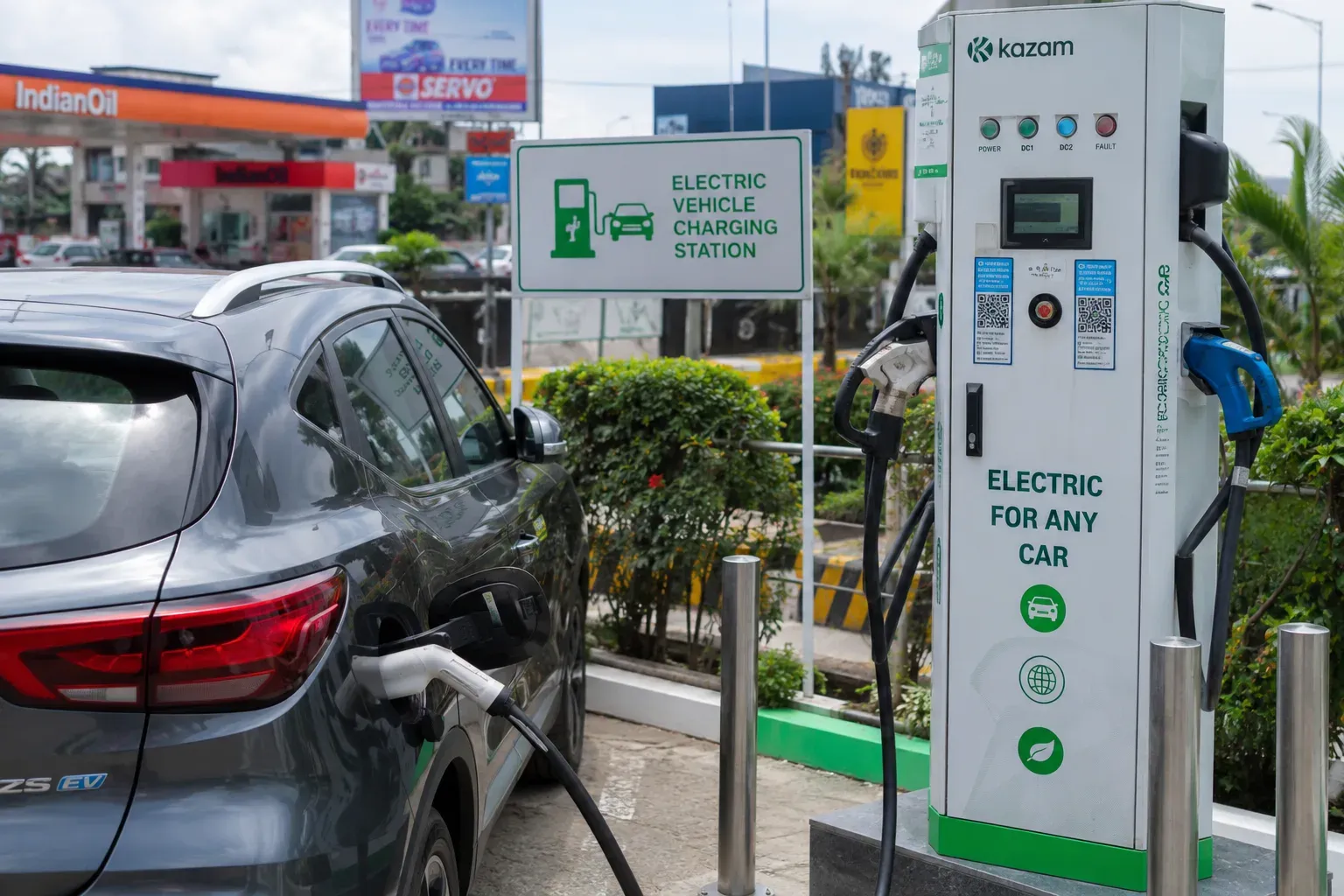
Planning ahead can reduce unnecessary stress. Drivers should identify suitable charging locations along the route and consider whether alternative stations are available nearby. It is also useful to leave some battery capacity in reserve rather than arriving at a charger with almost no energy remaining.
Public chargers can differ considerably in power, availability, payment methods, and reliability. A station advertised as fast does not automatically mean every vehicle will receive its maximum possible charging speed.
whitemagz com highlights how charging technology is increasingly becoming part of the broader everyday mobility experience. As infrastructure expands, drivers can expect charging opportunities to appear in more places where people naturally spend time.
Smart Charging Can Reduce Everyday Costs
Charging at the right time can sometimes help drivers manage electricity expenses. Where electricity pricing changes according to time of day, owners may benefit from scheduling charging during periods when rates are lower.
Smart chargers can automate this process. Instead of remembering when to plug in or stop charging, drivers can use schedules and vehicle settings to coordinate charging with their routine.
Some useful habits include:
- Schedule overnight charging when appropriate.
- Avoid charging to the maximum level unnecessarily.
- Use the vehicle’s built-in charging schedule when available.
- Monitor electricity consumption over several weeks.
- Compare home charging costs with public charging prices.
- Charge before long journeys instead of waiting until the battery is nearly empty.
Cost management should not come at the expense of convenience. If a vehicle is needed early in the morning, charging should be scheduled so sufficient energy is available regardless of a small potential electricity saving.
Battery Health and Charging Habits
Battery technology has improved considerably, but sensible charging practices can still support long-term vehicle ownership. Drivers should follow the manufacturer’s recommendations rather than assuming that every EV battery should be treated identically.
Frequent high-power fast charging may be useful when traveling, but many drivers can rely primarily on slower home charging for ordinary daily use. This can create a simple pattern: regular charging at home and fast charging when time is limited.
Temperature can also influence charging performance. Batteries may charge differently in very hot or cold conditions, and modern EVs may use thermal management systems to control battery temperature.
Drivers should also pay attention to their vehicle’s recommended charging range. Some vehicles allow owners to set a charging limit, helping them avoid maintaining the battery at a very high state of charge when maximum range is unnecessary.
Workplace and Destination Charging
Home charging is not the only convenient option. Workplace charging can be particularly useful for commuters who spend several hours parked at an office. Even moderate charging during a workday can provide meaningful additional range.
Destination charging follows a similar principle. Shopping centers, hotels, restaurants, entertainment venues, and parking facilities can provide charging while customers are already spending time at the location.
This approach changes the concept of charging from a dedicated activity into something integrated with daily life. Instead of waiting beside a vehicle for energy to be added, drivers can combine charging with another task.
For people without home charging access, workplace and destination chargers can become especially valuable. Apartment residents and urban drivers may use a combination of public, workplace, and neighborhood charging to create a dependable routine.
Choosing a Charger for Your Lifestyle
The right charger should be selected based on actual driving behavior rather than specifications alone. Buying the most powerful equipment available may not deliver meaningful benefits if the vehicle sits parked overnight and the driver’s daily mileage is modest.
A useful decision process begins with three questions: How far do you normally drive? Where is the vehicle parked most often? How quickly do you need to replenish the battery?
A low-mileage driver with overnight parking may be perfectly comfortable with slower charging. A high-mileage commuter may benefit from a dedicated Level 2 setup. Someone who frequently travels long distances should place greater emphasis on access to reliable DC fast-charging infrastructure.
whitemagz com presents the broader shift toward practical EV ownership as an opportunity to rethink transportation habits rather than simply replace a gasoline-powered vehicle with an electric one.
Installation and Safety Considerations
Charging equipment should be installed according to applicable electrical and safety requirements. Improvised wiring, damaged cables, unsuitable extension cords, or overloaded outlets can create unnecessary hazards.
Homeowners should use appropriately rated equipment and have permanent charging installations assessed by qualified professionals. Outdoor chargers should also be suitable for the intended environment and protected according to manufacturer instructions.
Drivers should regularly inspect charging cables and connectors for visible damage. If equipment becomes unusually hot, shows signs of electrical damage, or behaves unexpectedly, it should not simply be ignored.
Safety also means purchasing equipment from reputable manufacturers and following the vehicle’s charging instructions. Convenience is valuable, but reliable electrical equipment and proper installation are essential foundations of an effective charging system.
Making Charging Part of a Daily Routine
One of the easiest ways to make EV ownership comfortable is to develop a repeatable charging routine. Drivers do not need to constantly monitor battery percentage. Instead, they can establish simple habits around normal parking.
For example, a commuter might connect the vehicle after returning home on selected evenings. Another driver might charge primarily at work and use home charging only when necessary. A frequent traveler might maintain a preferred highway charging plan and keep a backup location in mind.
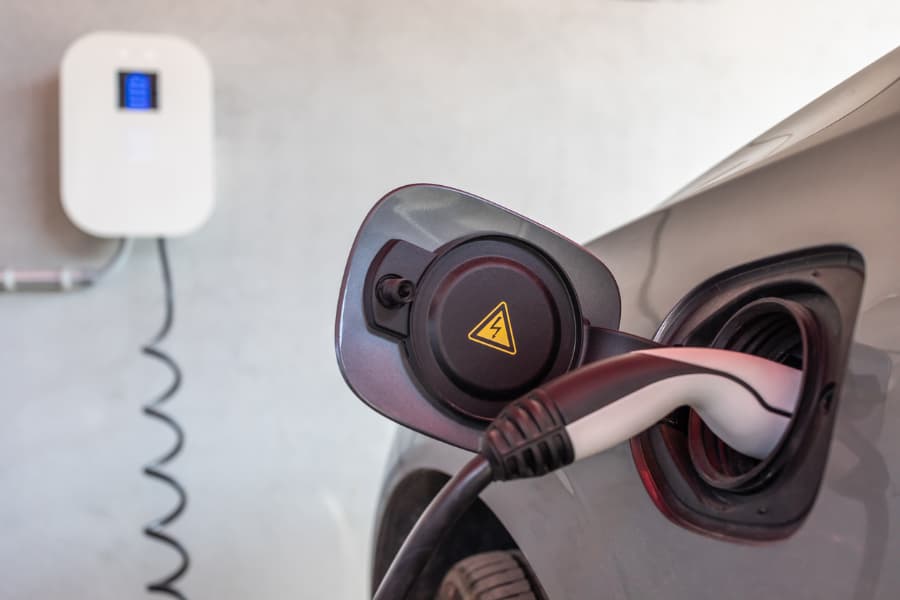
The objective is predictability. Once drivers understand how much energy they typically consume each day, charging becomes easier to manage.
Modern EVs also provide useful information about estimated range, energy consumption, charging progress, and scheduled charging. Learning to use these features can reduce uncertainty and help drivers make better decisions without constantly calculating battery levels manually.
The Future of Everyday EV Charging
Charging infrastructure is likely to become increasingly integrated into homes, workplaces, parking areas, retail spaces, and public transportation systems. Improvements in battery technology and charging equipment could further reduce waiting times and expand the usefulness of electric vehicles.
Smart energy management may also become more important. Connected chargers can potentially coordinate vehicle charging with household energy demand, renewable generation, and electricity pricing.
Vehicle-to-home and vehicle-to-grid technologies could eventually allow compatible EVs to play a more active role in energy management. Instead of being viewed solely as transportation devices, vehicles could become temporary energy storage resources.
As whitemagz com follows developments in modern technology and transportation, these changes demonstrate that EV charging is becoming more than an infrastructure issue. It is becoming part of a larger connected energy ecosystem.
Common Mistakes Everyday EV Drivers Should Avoid
New EV owners can make charging more complicated than necessary. One common mistake is focusing exclusively on charging speed while ignoring daily driving requirements. Another is waiting until the battery is almost empty before thinking about where to charge.
Other mistakes include:
- Assuming every public charger operates at the advertised maximum speed.
- Ignoring the vehicle manufacturer’s charging recommendations.
- Installing home equipment without proper electrical assessment.
- Depending entirely on one public charging location.
- Forgetting to consider cable length and parking arrangements.
- Charging habits that do not match actual driving needs.
- Neglecting software updates and vehicle charging settings.
Avoiding these issues can make electric vehicle ownership considerably smoother. The best charging strategy is usually simple, repeatable, and adapted to the driver’s real lifestyle.
Building a Reliable Charging Strategy
A reliable EV charging plan does not require complicated technology. It requires understanding where energy is most conveniently available and using different charging options intelligently.
For everyday driving, home or workplace charging can handle much of the routine energy requirement. Destination charging can supplement those options, while DC fast charging provides flexibility for longer journeys and unexpected travel.
Drivers should think of charging as a network of options rather than a single solution. If one charger is unavailable, another location or charging method can fill the gap. This mindset is particularly useful for people who regularly travel between cities or do not have dedicated home parking.
whitemagz com emphasizes the practical side of emerging technology, and EV charging provides a strong example of how innovation can influence ordinary routines. The technology becomes most valuable when it solves real problems without adding unnecessary complexity.
Conclusion
Electric vehicle charging solutions are evolving quickly, but everyday drivers do not need to adopt every new technology to benefit from electric mobility. The most effective approach is to build a charging routine around actual driving habits, parking availability, budget, and travel patterns. For many owners, a dependable home charger can provide the foundation for daily use. Workplace and destination charging can add convenience, while public fast chargers provide confidence during longer journeys. Smart scheduling, sensible battery management, proper installation, and basic planning can further improve the ownership experience.